


The Washington DC Conference on Education (WCE2026)

April 15-20, 2026 | Walter E. Washington Convention Center, Washington DC, United States, & Online


International, Intercultural, Interdisciplinary

The Washington DC Conference on Education (WCE2026) will be held alongside The Washington DC Conference on the Social Sciences (WCSS2026) as a part of the IAFOR American Conference Series, and many of the sessions will concentrate on areas at the intersection of education and the social sciences. In keeping with IAFOR’s commitment to interdisciplinary study, delegates at either conference are encouraged to attend sessions in other disciplines. Registration for either conference will allow delegates to attend sessions in the other. We expect the resultant professional and personal collaborations to endure for many years, and we look forward to seeing you in Washington DC and online!


Welcome to The Washington DC Conference on Education!

The International Academic Forum, in partnership with the IAFOR Research Centre at the Osaka School of International Public Policy (OSIPP) at The University of Osaka, Japan, is very happy to return to Washington, DC and to the United States’ mainland in 2026. This dual conference event will complement those we hold in other cities throughout the world.

IAFOR conferences offer a crucial and critical space for scholarship and creativity, attracting thousands of delegates annually, and from more than a hundred different countries, in events that are celebrations of the international, intercultural, and interdisciplinary. The Washington DC Conference on Education (WCE2026) will be held alongside its sister conference, The Washington DC Conference on the Social Sciences (WCSS2026). Both conferences build upon The IAFOR Conference on Educational Research and Innovation, held with our global partner, Virginia Tech, in 2019, 2022, and 2023.

Washington, DC is an important historical and cultural centre, with world class museums and iconic monuments. It is also a prominent intellectual and academic hub, with great universities and numerous think tanks; not only the nation’s capital, but given the outsized role of the United States in world affairs, DC is central to global dynamics. It is in DC that many discussions are had, ideas are shaped, decisions are made, and policies are crafted, that impact not only the furthest corners of the Union, but that are felt across the world. In these challenging times, it is a fitting physical and intellectual place to host our International Academic Forum.

We have a lot to learn from each other. Join us in DC in 2026!

For and on behalf of the IAFOR International Academic Board and the Conference Programme Committees,

Dr Joseph Haldane, The University of Osaka, Japan & University College London, United Kingdom
Chairman and CEO, IAFOR

Professor Jun Arima, University of Tokyo, Japan
President, IAFOR

Professor Anne Boddington
Executive Vice-President and Provost, IAFOR


Key Information
  • Location & Venue: Walter E. Washington Convention Center & Online
  • Dates: Wednesday, April 15, 2026 ​to Monday, April 20, 2026
  • Early Bird Abstract Submission Deadline: November 07, 2025*
  • Final Abstract Submission Deadline: January 16, 2026
  • Registration Deadline for Presenters: February 20, 2026

*Submit early to take advantage of the discounted registration rates. Learn more about our registration options.


  • Anne Boddington
    Anne Boddington
    IAFOR, Japan
  • Joseph Haldane
    Joseph Haldane
    IAFOR, Japan
  • Donald E. Hall
    Donald E. Hall
    Binghamton University, United States
  • Ira Harkavy
    Ira Harkavy
    University of Pennsylvania, United States
  • James W. McNally
    James W. McNally
    University of Michigan & NACDA Program on Aging, United States
  • James M Pitarresi
    James M Pitarresi
    Binghamton University, United States
Call for Papers

The WCE2026 Conference Programme Committee welcomes papers from a wide variety of interdisciplinary and theoretical perspectives, and submissions are organised into the following streams:

  • Teaching & Learning
  • Educational Structures
  • Community & Society
  • Language & Culture
  • Psychology, Mind & Brain
  • Innovation & Technology
  • Special Themes and Areas of Focus

IAFOR's Conference Themes for 2025-2029

IAFOR Themes 2025-2029
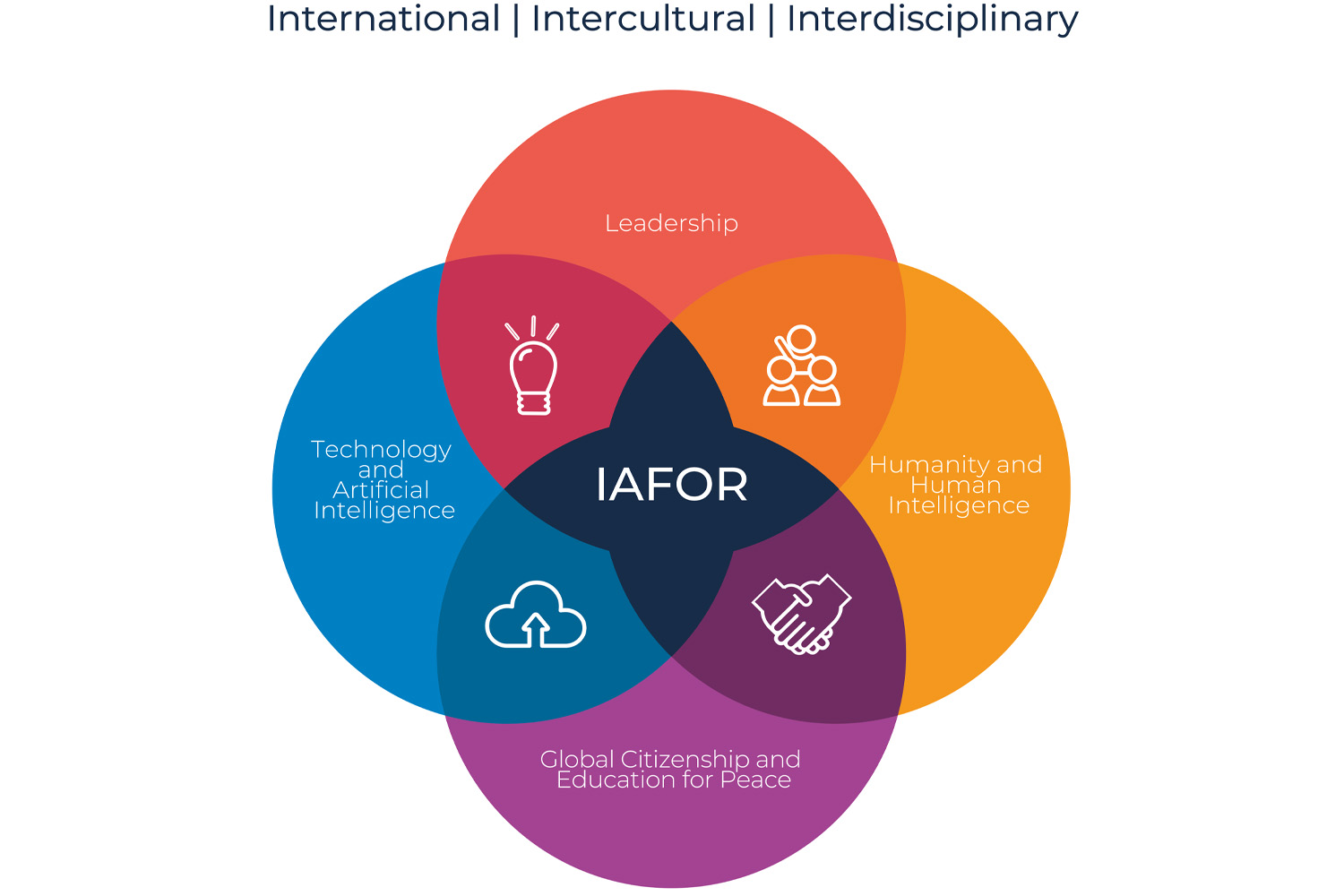
Our selected themes for 2025-2029 bring together ideas and encourage research and synergies in the following areas:

  • Technology and Artificial Intelligence
  • Humanity and Human Intelligence
  • Global Citizenship and Education for Peace
  • Leadership
  • Our four themes can be seen as standalone themes, but they are also very much in conversation with each other. Themes may be seen as corollaries, complementary, or in opposition/juxtaposition with each other. The themes can be considered as widely as possible and are designed, in keeping with our mission, to encourage ideas across the disciplines.


    About IAFOR’s Education Conferences

    IAFOR promotes and facilitates new multifaceted approaches to one of the core issues of our time, namely globalisation and its many forms of growth and expansion. Awareness of how it cuts across the world of education, and its subsequent impact on societies, institutions and individuals, is a driving force in educational policies and practices across the globe. IAFOR’s conferences on education have these issues at their core. The conferences present those taking part with three unique dimensions of experience, encouraging interdisciplinary discussion, facilitating heightened intercultural awareness and they promoting international exchange. In short, IAFOR’s conferences on education are about change, transformation and social justice. As IAFOR’s previous conferences on education have shown, education has the power to transform and change whilst it is also continuously transformed and changed.

    Globalised education systems are becoming increasingly socially, ethnically and culturally diverse. However, education is often defined through discourses embedded in Western paradigms as globalised education systems become increasingly determined by dominant knowledge economies. Policies, practices and ideologies of education help define and determine ways in which social justice is perceived and acted out. What counts as "education" and as "knowledge" can appear uncontestable but is in fact both contestable and partial. Discourses of learning and teaching regulate and normalise gendered and classed, racialised and ethnicised understandings of what learning is and who counts as a learner.

    In many educational settings and contexts throughout the world, there remains an assumption that teachers are the possessors of knowledge which is to be imparted to students, and that this happens in neutral, impartial and objective ways. However, learning is about making meaning, and learners can experience the same teaching in very different ways. Students (as well as teachers) are part of complex social, cultural, political, ideological and personal circumstances, and current experiences of learning will depend in part on previous ones, as well as on age, gender, social class, culture, ethnicity, varying abilities and more.

    IAFOR has several annual conferences on education across the world, exploring common themes in different ways to develop a shared research agenda which develops interdisciplinary discussion, heightens intercultural awareness and promotes international exchange.


    About IAFOR

    Founded in 2009, The International Academic Forum (IAFOR) is a mission-driven politically independent non-partisan and non-profit organisation dedicated to encouraging interdisciplinary discussion, facilitating intercultural awareness and promoting international exchange, principally through educational interaction and academic research. Based in Japan, its main administrative office is in Nagoya, and its research centre is in the Osaka School of International Public Policy (OSIPP), a graduate school of The University of Osaka.


    Sponsorship & Exhibition

    Sponsorship & Exhibition

    Sponsor the Event

    Enhance your brand visibility among a global audience of academics, policymakers, and professionals.

    IAFOR Conference Experience

    Exhibit at the Event

    Showcase your organisation or services in a dynamic conference setting.


    Anne Boddington
    IAFOR, Japan

    Biography

    Professor Anne Boddington is Executive Vice-President and Provost of IAFOR, and oversees the academic programs, research and policies of the forum.

    Anne Boddington is Professor Emerita of Design Innovation and has held executive and senior leadership roles in Higher Education including as Dean of Arts & Humanities at the University of Brighton, Pro Vice Chancellor for Research, Business & Innovation at Kingston and Pro Vice Chancellor for Research and Knowledge Exchange at Middlesex University.

    In 2022 she concluded chairing the Sub Panel (32) for Art & Design: History, Practice & Theory as part of the Research Excellence Framework (REF2021) and has extensive experience in the governance and conduct of peer review, research evaluation and assessment in REF2014 (Sub Panel Deputy Chair and Equality Diversity Advisory Panel [EDAP]) and RAE2008. A former member of AHRC’s Advisory Board, she is the current Chair of the Advisory Board for the UKRI’s National Interdisciplinary Circular Economy Research (NICER) programme (£30M), Deputy Chair and a Trustee of the Design Council, the government’s strategic advisor for design, and a member of both the InnoHK Scientific Committee (Hong Kong) and the Hong Kong Council for Accreditation of Academic and Vocational Qualifications (HKCAAVQ).

    Since the 1990’s Anne has worked across the UK and internationally with a wide range of quality assurance, professional, statutory, and regulatory bodies in the UK, Europe, the Middle East, Hong Kong, and India.

    As an independent consultant she now works as a strategic advisor and mentor and is committed to promoting equity, diversity, and inclusion in practice, developing effective governance, supporting career development, reducing bureaucracy, and improving organisational design, integrity, and productivity in the changing workplace.


    Workshop Presentation (2026) | Senior Academic Leadership
    Joseph Haldane
    IAFOR, Japan

    Biography

    Joseph Haldane is the Founder, Chairman, and CEO of IAFOR. He is responsible for devising strategy, setting policies, forging institutional partnerships, implementing projects, and overseeing the organisation’s global business and academic operations.

    Dr Haldane has a PhD from the University of London in 19th century French Studies (ULIP/RHUL), and has research interests in world history, politics, and education, as well as governance and decision-making.

    In 2022, Dr Haldane was named Professor in the United Nations Peace University's European Center for Peace and Development (ECPD). From 2019 he has been also a Visiting Professor at Doshisha University, where he teaches Ethics and Governance in the Global MBA, and a Member of the World Economic Forum’s Expert Network for Global Governance since 2017.

    Since 2015, he has been a Guest Professor at The Osaka School of International Public Policy (OSIPP) at The University of Osaka, having taught on the postgraduate Global Governance Course, and has been Co-Director of the OSIPP-IAFOR Research Centre, an interdisciplinary research centre situated within the university, since 2017. He is also a Member of the International Advisory Council of the Department of Educational Foundations at the University of Hawaiʻi Mānoa, United States.

    From 2020 to 2025, Dr Haldane was an Honorary Professor of University College London (UCL), through the Bartlett School of Sustainable Construction. Earlier in his career, he held full-time faculty positions at the Université Paris-Est Créteil, Sciences Po Paris, and Nagoya University of Commerce and Business, as well as visiting positions at the French Press Institute in the Université Paris-Panthéon-Assas and the Schools of Journalism of Sciences Po Paris and Moscow State University.

    Professor Haldane has given invited lectures and presentations at universities and conferences globally, including at the United Nations headquarters in New York, and advised universities, NGOs, and governments on issues relating to international education policy, public-private partnerships, and multi-stakeholder forums. He was the project lead on the 2019 Kansai Resilience Forum, held by the Japanese Government through the Prime Minister’s Office, and oversaw the 2021 Ministry of Foreign Affairs commissioned study on Infectious Diseases on Cruise Ships.

    From 2012 to 2014, Dr Haldane was Treasurer of the Chubu chapter of the American Chamber of Commerce Japan, and since 2015 has been a Trustee of HOPE International Development Agency Japan. He was elected Fellow of the Royal Asiatic Society in 2012 and the Royal Society of Arts in 2015. He lives in Japan and holds a black belt in Judo.

    Donald E. Hall
    Binghamton University, United States

    Biography

    Donald E. Hall is Provost and Executive Vice President for Academic Affairs at Binghamton University (SUNY), United States. He was formerly Dean of the Faculty of Arts, Sciences, and Engineering at the University of Rochester, United States, and held a previous position as Dean of Arts and Sciences at Lehigh University, United States. Provost Hall has published widely in the fields of British Studies, Gender Theory, Cultural Studies, and Professional Studies. Over the course of his career, he served as Jackson Distinguished Professor of English and Chair of the Department of English (and previously Chair of the Department of Foreign Languages) at West Virginia University. Before that, he was Professor of English and Chair of the Department of English at California State University, Northridge, where he taught for 13 years. He is a recipient of the University Distinguished Teaching Award at CSUN, was a visiting professor at the National University of Rwanda, was Lansdowne Distinguished Visiting Scholar at the University of Victoria (Canada), was Fulbright Distinguished Chair in Cultural Studies at Karl Franzens University in Graz, Austria, and was Fulbright Specialist at the University of Helsinki. He has also taught in Sweden, Romania, Hungary, and China. He served on numerous panels and committees for the Modern Language Association (MLA), including the Task Force on Evaluating Scholarship for Tenure and Promotion, and the Convention Program Committee. In 2012, he served as national President of the Association of Departments of English. From 2013-2017, he served on the Executive Council of the MLA.

    His current and forthcoming work examines issues such as professional responsibility and academic community-building, the dialogics of social change and activist intellectualism, and the Victorian (and our continuing) interest in the deployment of instrumental agency over our social, vocational, and sexual selves. Among his many books and editions are the influential faculty development guides, The Academic Self and The Academic Community, both published by Ohio State University Press. Subjectivity and Reading Sexualities: Hermeneutic Theory and the Future of Queer Studies were both published by Routledge Press. Most recently he and Annamarie Jagose, of the University of Auckland, co-edited a volume titled The Routledge Queer Studies Reader. Though he is a full-time administrator, he continues to lecture worldwide on the value of a liberal arts education and the need for nurturing global competencies in students and interdisciplinary dialogue in and beyond the classroom.

    Professor Donald E. Hall is a member of IAFOR’s International Academic Board.


    Workshop Presentation (2026) | Senior Academic Leadership
    Ira Harkavy
    University of Pennsylvania, United States

    Biography

    Professor Ira Harkavy is the founder and Barbara and Edward Netter Director of the Netter Center for Community Partnerships at the University of Pennsylvania, United States. As director of the Netter Center since 1992, Professor Harkavy has helped develop academically-based community service courses and community-engaged research projects that involve creating university-community partnerships and university-assisted community schools with The University of Pennsylvania’s local community of West Philadelphia. He teaches courses in history, urban studies, and Africana studies, as well as in the university’s Graduate School of Education.

    Professor Harkavy received his BA, MA, and PhD in History from the University of Pennsylvania and has written and lectured widely on the history and current practice of urban university-community-school partnerships and the democratic and civic missions of higher education. He has co-authored and co-edited thirteen books, including Higher Education Leadership for Democracy, Sustainability, and Social Justice (2023), Higher Education’s Response to the COVID-19 Pandemic: Building a More Sustainable and Democratic Future (2021), and Academic Freedom, Institutional Autonomy, and the Future of Democracy (2020). He is also Executive Editor of Universities and Community Schools.

    Professor Harkavy is involved in a number of education initiatives, currently serving as the Chair of the International Consortium for Higher Education, Civic Responsibility, and Democracy; Chair of the Anchor Institutions Task Force; Chair of the Paul Robeson House and Museum, and Chair Emeritus of the Coalition for Community Schools. He is founder and member of the Philadelphia Higher Education Network for Neighborhood Development (PHENND) Steering Committee.

    Among other honours, Harkavy is the recipient of the University of Pennsylvania’s Alumni Award of Merit, Campus Compact’s Thomas Ehrlich Faculty Award for Service Learning, New American Colleges and Universities’ Ernest L. Boyer Award, a Fulbright Senior Specialist Grant, and three honorary degrees. Under his directorship, the Netter Center for Community Partnerships received the inaugural William T. Grant Foundation Youth Development Prize awarded by The National Academies and a Best Practices/Outstanding Achievement Award from HUD’s Office of Policy Development and Research.


    Keynote Presentation (2026) | Creating the Democratic Civic University Through Local Engagement in a Time of Crisis
    James W. McNally
    University of Michigan & NACDA Program on Aging, United States

    Biography

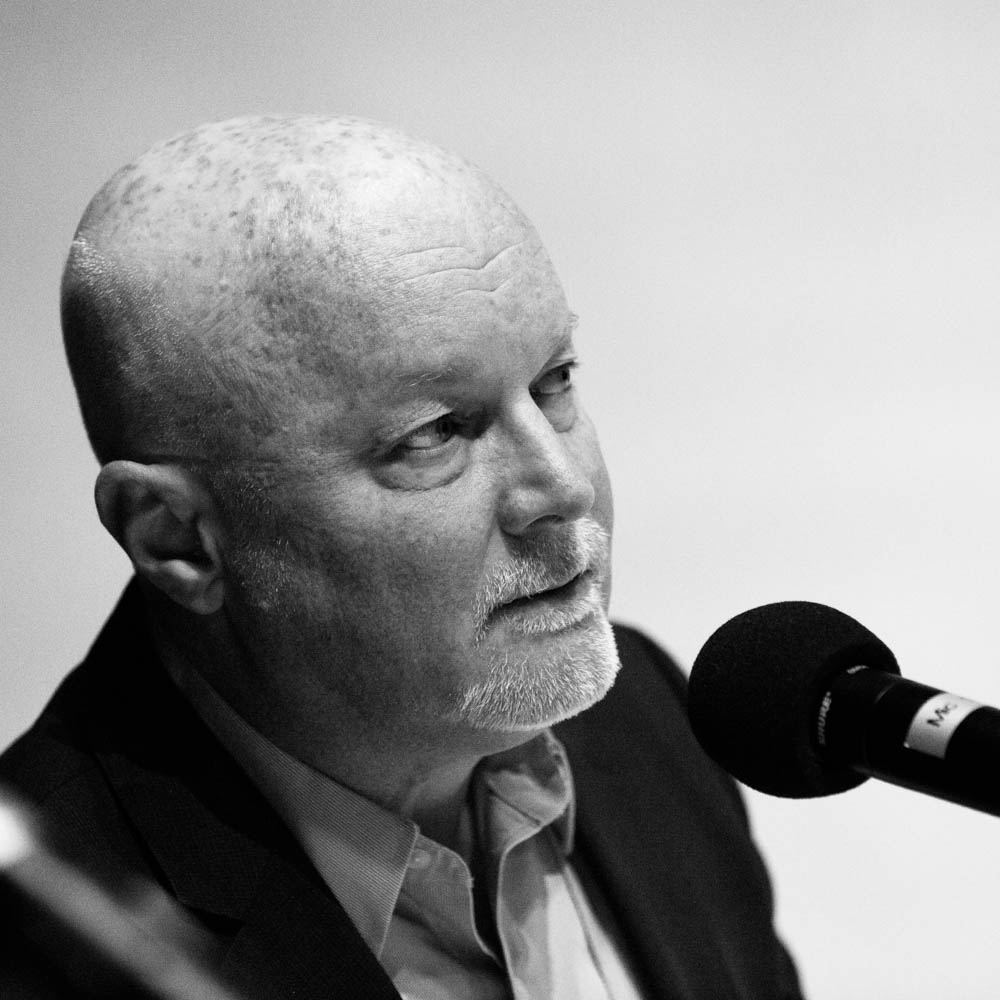
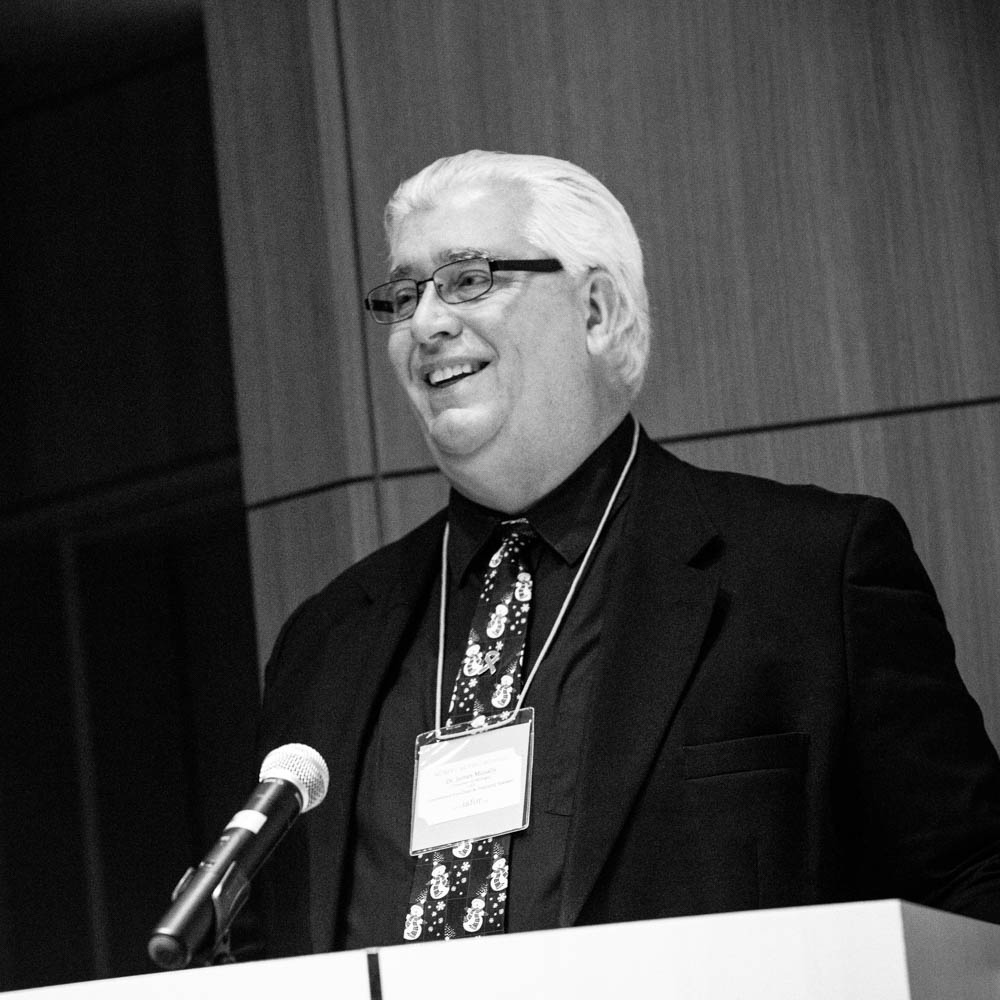
    Dr James W. McNally is the Director of the NACDA Program on Aging, a data archive containing over 1,500 studies related to health and the aging life course. He is also a Senior Advisor for the National Institute on Aging (NIA), Division of Behavioral and Social Science (DBSR/ODRA). He currently does methodological research on the improvement and enhancement of secondary research data and has been cited as an expert authority on data imputation. Dr McNally has directed the NACDA Program on Aging since 1998 and has seen the archive significantly increase its holdings with a growing collection of seminal studies on the aging life course, health, retirement and international aspects of aging. He has spent much of his career addressing methodological issues with a specific focus on specialised application of incomplete or deficient data and the enhancement of secondary data for research applications. Dr McNally has also worked extensively on issues related to international aging and changing perspectives on the role of family support in the later stages of the aging life course.


    Workshop Presentation (2026) | Writing a Successful Grant Application
    James M Pitarresi
    Binghamton University, United States

    Biography

    Dr James M. Pitarresi serves as Vice Provost for Online and Innovative Education at Binghamton University (SUNY), United States, and as Executive Director of the university’s Center for Learning and Teaching. He works across campus to strengthen the learning environment by advancing high-quality online degrees, supporting faculty development, and promoting thoughtful integration of learning technologies. He co-chairs the university’s Learning Environment Committee and recently co-chaired planning for a new 30-classroom academic building. A Distinguished Teaching Professor of Mechanical Engineering and former department chair, he founded Binghamton’s Innovation Lab and Innovation Scholars programme and teaches courses in innovation and entrepreneurship that leverage generative AI as a partner for creative problem solving. He regularly delivers talks and workshops on generative AI in education for higher education, school districts, and professional audiences. His scholarship spans computational mechanics, vibration modeling, electronics packaging, and student success. He is co-author of three mechanical engineering texts, with a fourth in progress, and serves on McGraw Hill Education’s Access Engineering Faculty Advisory Board. He earned his BS, MS, and PhD from the State University of New York at Buffalo, United States, and is a recipient of the SUNY Chancellor’s Award for Excellence in Teaching.


    Keynote Presentation (2026) | Beyond Productivity: Why the Future of AI in Education Must Be Human-Centric